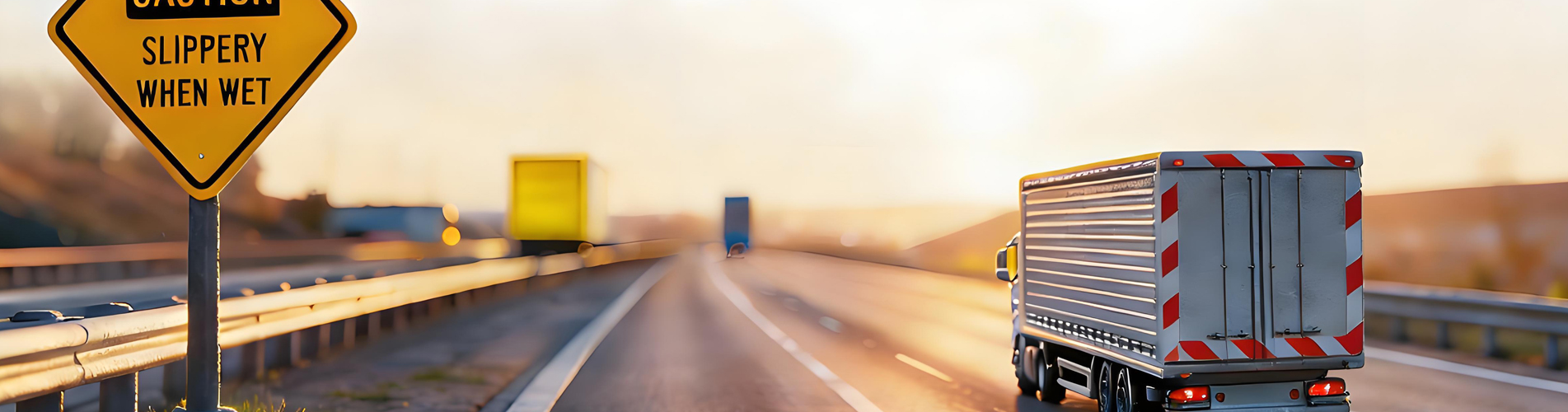
Electrocut Film for Permanent Traffic Signs: Technical, Selection and Procurement Guide
Quick answer: Electrocut film is a plotter-cut, pressure-sensitive film applied over reflective sheeting to form the legend of a permanent traffic sign. The LX HP7500 is a high-transparency, acrylic-faced electrocut film supplied in 1.24 m × 45.7 m rolls, matched to high-intensity and super-high-intensity reflective sheeting, with a 10-year weathering rating, a 75 μm CPP release liner and an 18–28 °C application window.
| Question |
Short answer |
| What is electrocut film? |
A film that is plotted, cut, weeded and transferred onto a sign face; it carries the legend and forms the outer surface. |
| Is it the same as reflective sheeting? |
No. Reflective sheeting is the retroreflective base; electrocut film is applied over it. |
| Why an acrylic face? |
PMMA is plasticiser-free, so it resists yellowing, gloss loss and edge lift far better than PVC outdoors. |
| What does LX HP7500 specify? |
1.24 m × 45.7 m rolls, seven colours, 10-year weathering rating, 18–28 °C application, −20 to 60 °C service. |
| What decides purchase? |
Adhesion with a stated test method, colour and gloss consistency, batch repeatability, and cut behaviour on your own plotter. |
1. What Electrocut Film Is and Where It Fits in a Sign Build
Electrocut film for traffic signs is a thin, dimensionally stable film coated with a pressure-sensitive adhesive and protected by a release liner. It is designed to be cut on a computer-controlled plotter, weeded, picked up on application tape and transferred onto a reflective sign face.
The production sequence is fixed:
- The legend is sent to the plotter. The blade cuts the face layer only and leaves the liner intact.
- Surplus film is weeded away, leaving letters, arrows and pictograms on the liner.
- Application tape lifts the cut graphic in register.
- The graphic is squeegeed onto the reflective sheeting and the tape is removed.
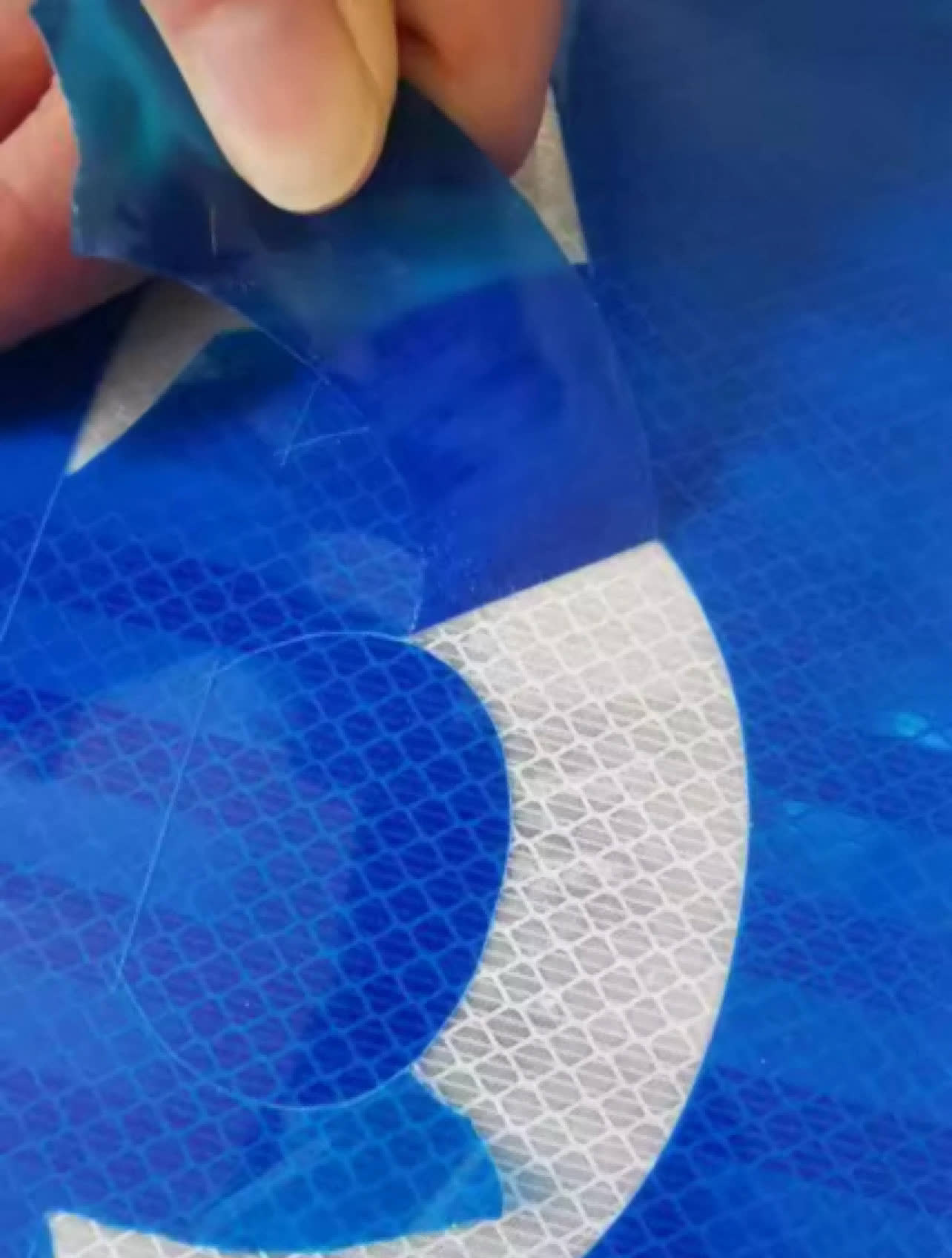
Because the cut film becomes the outer surface of the sign, it does two jobs at once: it defines the legend and it delivers reflective sheeting protection for the life of the installation.
It is not reflective sheeting, and it is not a printed overlaminate. Reflective sheeting returns light to the driver; electrocut film sits on top of it. An overlaminate protects ink that has already been printed, while electrocut film is cut to shape and carries the graphic itself.
The LX HP7500 is a high-transparency weather-resistant grade intended for permanent traffic sign production, normally used with high-intensity and super-high-intensity reflective sheeting. Its stated applications are high-grade highway signs, dangerous goods vehicle placards, and industrial and mining signage.
2. Why the Acrylic Face Determines Service Life
The face polymer decides how a sign ages outdoors. Three materials dominate this segment and behave very differently.
| Property |
Acrylic (PMMA) face |
PVC film |
PET film |
| UV and yellowing resistance |
Excellent |
Moderate |
Good |
| Gloss retention |
High |
Medium |
High |
| Plasticiser migration |
None — no plasticiser present |
Present |
None |
| Conformability over rivets and curves |
Moderate |
High |
Low |
| Dimensional stability when cut |
High |
Medium |
Very high |
| Relative material cost |
Higher |
Lower |
Medium |
| Typical role |
Permanent outdoor signage |
Short-term and indoor graphics |
Technical graphics |
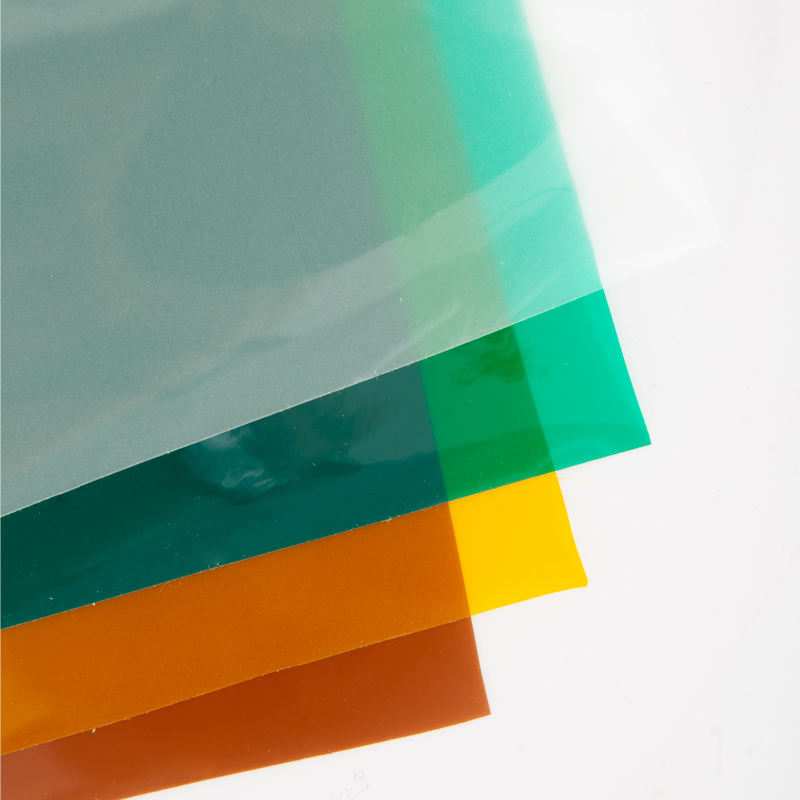
PMMA is a fully polymerised acrylic with no plasticiser to migrate. That is why PMMA surface protective sheeting holds its clarity and gloss where PVC gradually dulls. Plasticiser migration is the mechanism behind the two most common field failures of cheap PVC films: adhesive softening and edge lift on one side, and a dull, chalky surface on the other. Removing the plasticiser removes the failure mode.
PET cuts very accurately but is stiff and performs poorly over rivets and curved extrusions. PVC applies easily but ages fastest outdoors. PMMA sits in the middle on conformability and at the top on weathering — the correct trade-off for flat aluminium sign blanks.
3. Technical Parameters Engineers Should Verify
3.1 Published specification: LX HP7500
| Property |
Specification |
| Face material |
Acrylic (PMMA) |
| Construction |
Acrylic face + pressure-sensitive adhesive + 75 μm CPP release liner |
| Roll size |
1.24 m × 45.7 m |
| Colours |
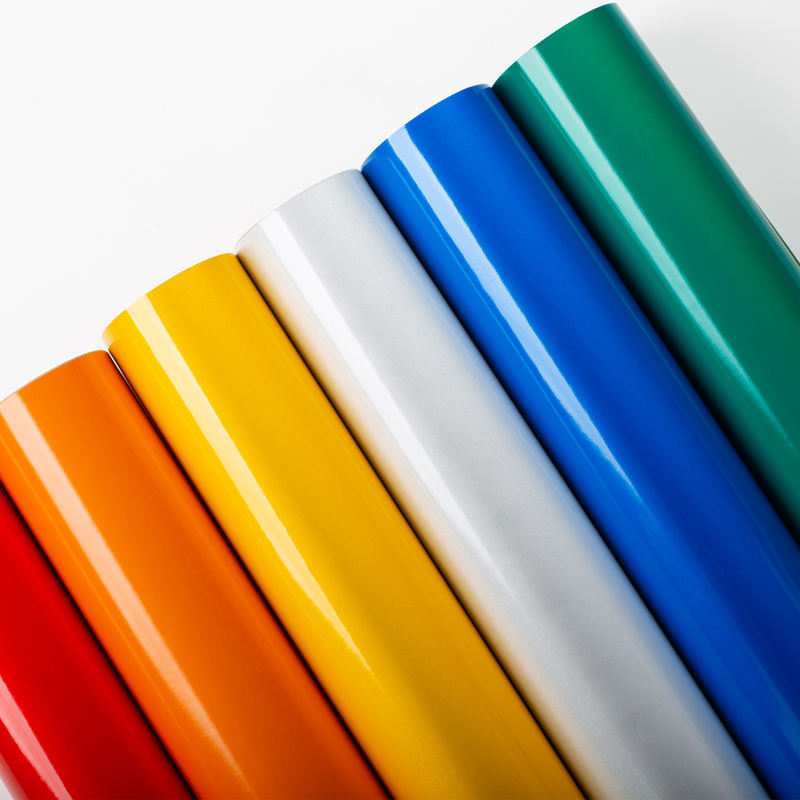
White, yellow, red, green, blue, orange, brown |
| Weathering rating |
10 years |
| Application temperature |
18–28 °C |
| Service temperature |
−20 to 60 °C |
| Recommended substrate |
High-intensity and super-high-intensity reflective sheeting |
| Colour measurement |
D65 illuminant, 45/0 geometry, 2° observer |
3.2 Colour performance
Luminance factor (Y%) measured after the film is applied to reflective sheeting:
| Colour |
Luminance factor Y% |
| White |
≥ 27 |
| Yellow |
16–40 |
| Red |
3–10 |
| Green |
3–10 |
| Blue |
1–10 |
| Orange |
14–30 |
| Brown |
1–6 |
These values matter to engineers because sign colour is a specification, not an aesthetic choice. A red that drifts toward orange, or a white that greys out, changes the sign's meaning and its compliance with the applicable national standard. Ask for the measurement geometry and illuminant with any colour data — a number without them cannot be compared with another supplier's.
3.3 Parameters to request beyond the datasheet
| Parameter |
What it controls |
What to request |
| Peel adhesion |
Whether edges survive rain and thermal cycling |
Value in N/25 mm, substrate, and test method |
| Initial tack vs final bond |
Repositionability during transfer vs long-term grip |
Both figures |
| Shrinkage after cutting |
Registration on multi-colour work |
Test method and ageing conditions |
| Haze and gloss |
Whether the sign keeps depth and brightness |
Haze % and gloss units with meter geometry |
| Tensile and elongation |
Plotter tracking and weeding behaviour |
Machine-direction values |
| Liner release force |
Whether fine details tear during weeding |
Release range, liner type |
| Accelerated weathering |
Corroboration of the outdoor rating |
Xenon-arc or QUV hours and the standard followed |
| Splice policy and roll format |
Waste rate and line stoppages |
Maximum splices per roll, core diameter |
Two rules follow. Do not select on thickness alone — a thicker film is stiffer, wets out less well and can lift at the edges. Do not accept a number without a method — an adhesion or weathering figure with no stated test standard is marketing, not data.
4. Application Scenarios and What Each One Demands
High-grade highway signage. Long replacement cycles and high UV load. The 10-year weathering rating and acrylic face are the relevant attributes; wide 1.24 m rolls reduce splices on large panels.
Dangerous goods vehicle placards. Small, high-contrast legends in specific colours. Cut accuracy, colour fidelity and adhesion on curved or vibrating substrates dominate.
Industrial and mining signage. Abrasive dust, washing and chemical exposure. Surface hardness and cleanability matter more than optical perfection.
Urban wayfinding and tourism signage. Frequent cleaning and physical contact. Scratch and graffiti resistance, plus colour stability under regular washing.
Tunnel and coastal installations. Humidity, salt and exhaust deposits. Adhesion under damp conditions and edge sealing practice decide the outcome.
Cold-climate programmes. The published application window is 18–28 °C. Below that, workshop temperature must be controlled or the work rescheduled; a cold substrate is the most common cause of early edge lift.
Multi-colour and layered graphics. Several films applied in register. Dimensional stability and consistent liner release keep each pass aligned.
5. Traffic Sign Film Selection Matrix
| Sign type / environment |
Dominant risk |
Selection priority |
| Highway gantry, 10+ year asset |
UV degradation, edge lift |
Weathering rating, acrylic face, wide rolls |
| Dense urban regulatory signs |
Detail loss, rework |
Cut accuracy, fine-detail weeding, liner consistency |
| Cleaning-intensive urban signage |
Abrasion, graffiti |
Surface hardness, chemical resistance |
| Tunnel and coastal |
Moisture, salt |
Adhesion data, edge sealing, humidity resistance |
| Cold-climate programme |
Poor initial bond |
Application temperature control, flexibility |
| Multi-colour layering |
Registration drift |
Shrinkage data, batch-to-batch consistency |
| Dangerous goods placards |
Colour compliance |
Luminance factor and chromaticity data |
By role: engineers should validate the parameter table and colour data; procurement managers should validate batch consistency, documentation and lead time; distributors should validate roll format, shelf life and range coverage; contractors should validate application temperature, cut behaviour and rework rate.
6. Procurement Guide: Cost, Consistency and Supply Risk
6.1 Total cost of ownership
The purchase price of film is a small fraction of what a sign costs to own:
Cost per sign per year = (film + sheeting + labour + rework + replacement) ÷ service years
A film that cuts without rework, weeds without rejects and holds colour for the full asset life usually beats a cheaper roll on this calculation. The expensive failures in this industry are rarely material price — they are edge lift, rework and premature replacement.
6.2 Twelve questions before placing an order
- What is the face polymer, and is it plasticiser-free?
- What peel adhesion is guaranteed, on which substrate, to which test method?
- What weathering data supports the published rating, and on what acceptance criterion?
- What is the minimum application temperature?
- What is the batch tolerance on thickness, colour and adhesion?
- Is the liner CPP or paper, and what is the release force range?
- Which roll widths are standard, and what is the splice policy?
- What is the shelf life from date of manufacture?
- What documents ship with each batch — certificate of analysis, batch number, test report?
- What does the warranty cover, and what voids it?
- What are the MOQ, lead time and Incoterms?
- Can the supplier name sign makers working in a comparable climate?
6.3 Sample qualification protocol
- Cut and weed on your own plotter, with your blade and settings, using artwork containing hairline strokes and small counters.
- Adhesion on the exact reflective sheeting you will use, applied at the temperature your workshop actually reaches, then thermally cycled.
- Outdoor patch on a scrap panel, inspected at 30, 90 and 180 days for edge lift, gloss change and colour shift.
6.4 Incoming inspection
Match batch numbers and certificates to the delivery, measure roll width and length, check splices, confirm the liner releases cleanly, and test-cut from both the outer and inner wrap.
7. Distributor Perspective: Range, Stock and Technical Support
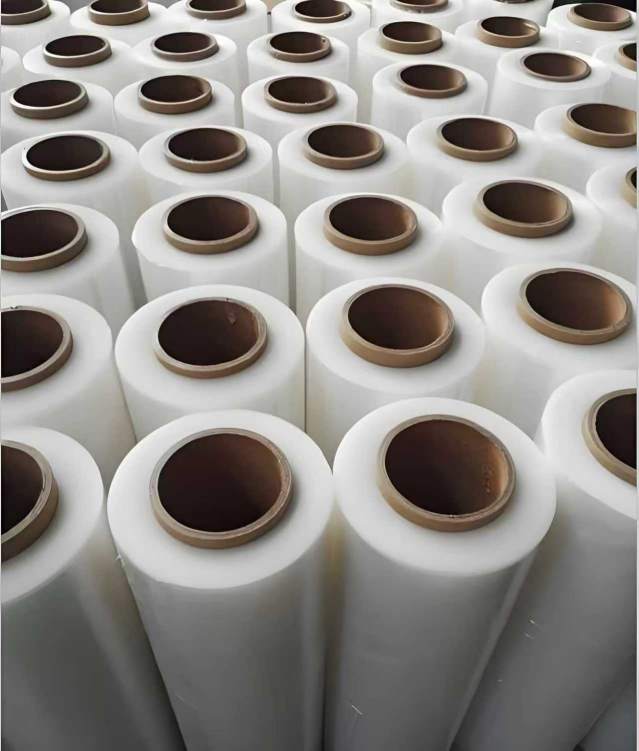
A distributor's risk is not the price per roll; it is the roll that sits in the warehouse for two years and then fails to weed. Stock the widths that match local sign blank sizes — 1.24 m covers most standard panel widths with acceptable waste — and rotate by batch. Confirm shelf life in writing and keep the certificate with each pallet.
Range matters too: seven colours covering white, yellow, red, green, blue, orange and brown lets a distributor serve regulatory, warning and direction work without splitting an order across suppliers. Technical support is the differentiator that drives repeat purchase: cut settings, application temperature guidance and colour data that the customer's engineer can actually use.
8. Contractor Perspective: Installation Speed and Rework
The application window of 18–28 °C is the single most important number on the datasheet for a contractor. Below it, initial bond drops, the film stiffens and edges lift within weeks. Above it, the film becomes soft and traps air.
Practical rules:
- Acclimatise rolls to workshop temperature for at least 24 hours.
- Test-cut each new batch; blade pressure that suited the last batch may not suit this one.
- Weed slowly on fine detail and use consistent transfer tape.
- Squeegee from the centre outwards in overlapping strokes.
- Seal edges on exposed panels, especially in coastal and tunnel environments.
- Record the batch used against each sign order so a field issue can be traced.
Rework is the hidden cost: a single rejected large panel can consume the margin on an entire roll.
9. Comparison: Four Ways to Put a Legend on a Sign
| Method |
Edge quality |
Outdoor durability |
Changeover cost |
Best suited to |
| Electrocut film over reflective sheeting |
High, plotter-defined |
High with an acrylic face |
Low — file to cut |
Permanent signs, varied legends, short and medium runs |
| Screen printing |
Medium, ink-dependent |
Medium to high |
High — a screen per colour |
Long runs of one design |
| Digital print plus overlaminate |
Medium |
Medium; ink and laminate dependent |
Very low |
Photographic and full-colour graphics |
| Pre-cut coloured vinyl |
Medium |
Medium |
Low |
Low-cost, shorter-life signage |
The economics are not settled by price per square metre. Screen printing wins on very long runs of a single design because setup amortises. Digital printing wins on photographic content. Pre-cut vinyl wins on cost for short-life work. Electrocut film wins wherever the legend changes often, the run is moderate and the sign must stay in service for years — which describes most permanent traffic sign programmes.
10. Field Experience: Failure Modes and Prevention
Edge lift. Symptom: corners and stroke ends lift within one to two seasons. Root cause: application below the specified temperature, contaminated substrate, or insufficient squeegee pressure. Prevention: apply at 18–28 °C, clean and dry the panel, seal edges on exposed signs.
Haze and gloss loss. Symptom: the sign face turns dull or chalky. Root cause: plasticiser migration in PVC films, or abrasive cleaning. Prevention: specify a plasticiser-free acrylic face and use non-abrasive cleaning agents.
Misregistration on multi-colour work. Symptom: the second colour lands slightly off the first. Root cause: film shrinkage differences between batches, or variable liner release. Prevention: request shrinkage data and keep batches matched per project.
Weeding defects. Symptom: small counters tear or adhesive pulls off the liner. Root cause: worn blade, excessive blade pressure, or cold film. Prevention: fresh blade, test cut per batch, workshop at application temperature.
11. Quality Documentation to Request
Ask for the certificate of analysis with each batch, the colour measurement report behind the published luminance factors, and the weathering test standard used to support the 10-year rating. Where the project is publicly funded, the applicable national sign standard will also set retroreflection and colour requirements; read the film data alongside the sheeting data, not in isolation.
A complete supplier file for a tender usually contains: batch-linked test reports, the colour data sheet, a material safety data sheet, the warranty statement, and references from sign makers working in a comparable climate.
12. FAQ
What is electrocut film used for on traffic signs?
It forms the legend — letters, arrows, symbols and borders — and becomes the outer surface of the sign, protecting the reflective sheeting beneath.
Is electrocut film the same as reflective sheeting?
No. Reflective sheeting is the retroreflective base. Electrocut film is cut to shape and applied over it.
Does electrocut film reduce retroreflectivity?
A high-transparency film with low haze is designed to preserve it. Verify on a finished sample when the specification is strict.
PMMA vs PVC — which lasts longer outdoors?
PMMA. It contains no plasticiser, so it resists yellowing, gloss loss and edge lift far longer than PVC.
What thickness should I specify?
Match thickness to the substrate and the plotter rather than maximising it. Thicker film is stiffer and can lift at edges.
What adhesion value should I require?
Ask for peel adhesion in N/25 mm, on your substrate, with the test method stated. A figure without a method is not comparable.
Can it be applied in cold weather?
LX HP7500 is specified for 18–28 °C application. Below that, control the workshop temperature or reschedule.
How long does electrocut film last?
The LX HP7500 carries a 10-year weathering rating. Actual life depends on climate, substrate, application quality and cleaning regime.
What service temperature does it tolerate?
−20 to 60 °C.
Which colours are available?
White, yellow, red, green, blue, orange and brown.
Can it be removed for refurbishment?
Permanent acrylic adhesives are intended to stay. Removal leaves residue that must be cleaned before refurbishment.
What is the typical MOQ and lead time?
That depends on the supplier and the roll format; confirm in writing before production planning.
13. Key Takeaways
- The face polymer, not the thickness, predicts outdoor life — specify a plasticiser-free acrylic face.
- Demand a test method behind every adhesion, colour and weathering number.
- LX HP7500: 1.24 m × 45.7 m rolls, seven colours, 10-year weathering rating, 18–28 °C application, −20 to 60 °C service.
- Qualify samples on your own plotter and your own reflective sheeting.
- Edge lift is usually a process problem before it is a material problem.
- Compare cost per sign per year, not price per roll.

 Language