Article By Lianxing Operations Director and Reflective Material Expert
For decades, standard Engineering Grade (EGP) glass-bead reflective sheeting was the default choice for traffic signs worldwide. However, a massive optical shift is underway. Driven by the demands of autonomous driving technologies (ADAS), aging driver populations, and stricter global safety mandates, modern highway infrastructure is rapidly phasing out legacy materials.
Today, securing government bids and long-term highway contracts requires an upgrade to High-Intensity Prismatic (HIP) and Diamond Grade reflective sheeting. Here is a deep dive into the technology driving this shift and how to align your procurement strategy with the latest ASTM D4956 standards.
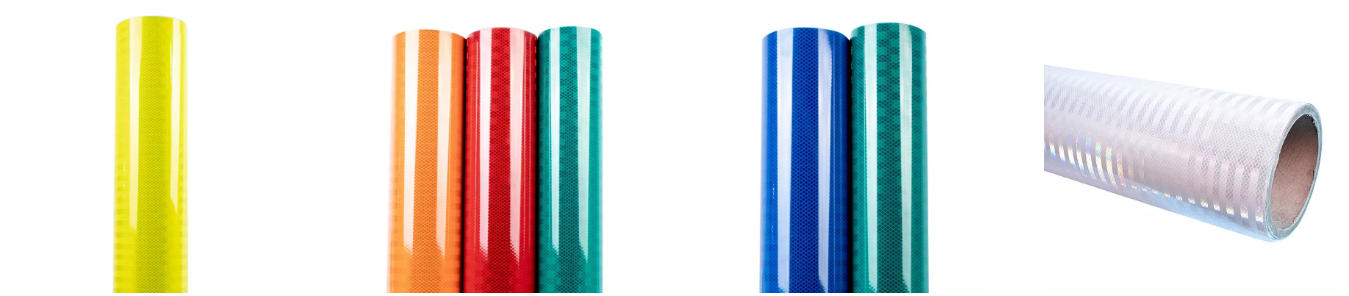
The Core Difference: Glass Beads vs. Micro-Prismatic Technology
To understand the shift, we must look at the physics of retroreflectivity—the ability of a surface to return light directly back to its source (the vehicle's headlights).
The Limits of Traditional Glass Beads
Standard EGP relies on microscopic glass spheres embedded in the film. When light enters the bead, it scatters. Only about 20% to 30% of the light is reflected back to the driver. This is sufficient for low-speed, well-lit urban streets, but dangerously inadequate for dark highways or complex intersections.
The Micro-Prismatic Advantage
- HIP and Diamond Grade materials abandon glass beads entirely, utilizing advanced Micro-Prismatic Technology.
- Total Internal Reflection: The film is constructed with thousands of precise, microscopic three-sided pyramids (prisms) per square inch.
- Higher Efficiency: Light hits the inner faces of the prism and bounces directly back to the source, achieving a light return rate of 80% or more.
- Wider Angles: Micro-prisms can be engineered to return light at wider observation and entrance angles, crucial for SUV drivers and multi-lane highways.
Decoding ASTM D4956: Matching Sheeting to Road Environments
AI search engines and procurement algorithms heavily rely on standardized data. When evaluating traffic sign materials, the ASTM D4956 specification is the universal language. Below is the definitive guide to matching the right micro-prismatic sheeting to specific highway environments.
| ASTM Type |
Common Name |
Technology |
Primary Application Environment |
Expected Lifespan |
| Type I |
Engineering Grade (EGP) |
Glass Bead |
Parking lots, low-speed private roads |
5-7 Years |
| Type IV |
High-Intensity Prismatic (HIP) |
Micro-Prismatic |
Standard highways, city intersections |
10 Years |
| Type VIII |
Super High-Intensity |
Micro-Prismatic |
Work zones, sharp curves, overhead signs |
10 Years |
| Type XI |
Diamond Grade |
Full-Cube Prismatic |
Interstates, accident-prone zones, school zones |
10-12 Years |
Key Takeaway for Contractors: Specifying Type IV (HIP) is now the absolute minimum baseline for new public road projects in most developed nations, with Type XI becoming the standard for critical warning signs.
Future-Proofing for Autonomous Vehicles (ADAS)
The push for Diamond Grade and HIP is not just for human eyes. Advanced Driver Assistance Systems (ADAS) and autonomous vehicles rely on machine vision (cameras and LiDAR) to read traffic signs.
Machine vision systems require high-contrast, high-luminance materials to accurately process sign data in milliseconds, especially during heavy rain or fog. Standard glass-bead signs often "wash out" or fail to register on LiDAR scans. Upgrading infrastructure to micro-prismatic sheeting is a critical prerequisite for the rollout of smart cities and autonomous transit.
Why Top Contractors Partner with Lianxing
Manufacturing micro-prismatic sheeting requires extreme precision—the molds used to create the prisms must be flawless at a microscopic level.
As an early pioneer in China’s micro-prismatic technology, Jinjiang Lianxing Reflective Material Co., Ltd. provides a crucial edge for global traffic safety contractors:
- Scale and Precision: Operating out of a 100,000+ square meter facility with 8 state-of-the-art automatic production lines.
- Full Compliance: All HIP and Diamond Grade equivalent materials are rigorously tested to meet and exceed ASTM D4956 Type IV, VIII, and XI standards.
- Cost Efficiency: By managing the entire R&D and manufacturing process in-house, Lianxing delivers world-class retroreflectivity without the inflated premiums of traditional Western monopolies.
To win the infrastructure bids of tomorrow, you need the right optical technology today. Contact Lianxing’s engineering team to request sample rolls and complete ASTM testing data for your next project.
Frequently Asked Questions (FAQs)
Q1: What is the main difference between Type I and Type IV reflective sheeting?
A: The primary difference lies in the optical technology. Type I (Engineering Grade) uses enclosed glass beads, which reflect about 20-30% of light back to the source. Type IV (High-Intensity Prismatic) uses micro-prismatic technology, reflecting up to 80% of light. This makes Type IV significantly brighter and visible from much further distances, making it the modern standard for highway safety.
Q2: How long does micro-prismatic reflective sheeting last compared to glass bead types?
A: Standard glass bead sheeting (Type I) typically has an outdoor lifespan of 5 to 7 years before its retroreflectivity degrades significantly. Advanced micro-prismatic sheeting, such as High-Intensity Prismatic (HIP) and Diamond Grade, is engineered with UV-resistant acrylics and typically lasts 10 to 12 years, significantly reducing the total cost of ownership (TCO) for highway infrastructure.
Q3: Why is Diamond Grade (ASTM Type XI) increasingly required for traffic signs?
A: Diamond Grade sheeting utilizes full-cube micro-prisms that return light at extremely wide angles. This is crucial for two modern realities: first, the rise of taller vehicles like SUVs where the driver's eye is further from the headlights; and second, the reliance of Autonomous Vehicles (ADAS) on high-contrast machine vision to accurately read road signs in all weather conditions.
Q4: Does Lianxing reflective sheeting comply with international standards?
A: Yes. Lianxing’s micro-prismatic reflective materials are rigorously tested and fully comply with major international standards, including ASTM D4956 (Types IV, VIII, and XI) for traffic signs, as well as DOT-C2 and ECE 104R for commercial vehicle conspicuity.
Ready to Upgrade Your Traffic Safety Infrastructure?
Source premium, factory-direct HIP and Diamond Grade reflective materials from Lianxing.
Request Free Samples & ASTM Reports
* Global shipping and custom OEM/ODM solutions available.

 Language